Contact me via WhatsApp Chat with Catalina on WhatsApp

Author: Catalina Garay

  • Forbearance in Ancient Egypt

    Forbearance in Ancient Egypt

    What the Pyramids Teach Us About Patience, Endurance, and Time

    In today’s fast-moving world, patience often feels like a forgotten virtue. Technology delivers immediate results, expectations are shaped by speed, and waiting can feel uncomfortable. Yet one of the greatest civilisations in human history was built upon a very different relationship with time — one defined by endurance, discipline, and long-term vision.

    Ancient Egypt offers a powerful reminder that meaningful achievements rarely happen quickly. From the construction of pyramids to the organisation of society itself, Egyptian culture was rooted in forbearance — the ability to persist calmly over long periods toward a greater goal.

    Understanding this mindset provides insight not only into Egyptian civilisation but also into our own relationship with time and ambition.

    Building Eternity: The Pyramids as Symbols of Patience

    Around 2500 BCE, the construction of pyramids required years — sometimes decades — of coordinated effort. Thousands of workers transported stone, organised labour, and planned architectural structures with extraordinary precision. Many individuals involved in these projects would never see the final result completed during their lifetimes.

    This long-term commitment reflected a worldview centred on continuity rather than immediacy. The pyramids were not simply tombs; they were expressions of eternity, cosmic order, and belief in the afterlife.

    For the Egyptians, time extended far beyond individual lifespan. What mattered was contributing to something enduring.

    Ma’at: The Philosophy of Balance and Endurance

    At the heart of Egyptian thought was the concept of Ma’at — the principle of balance, order, harmony, and justice that governed both the universe and human society. Maintaining Ma’at required patience, responsibility, and perseverance.

    Forbearance was therefore not merely practical but spiritual. Stability, calm effort, and disciplined action were seen as ways of sustaining cosmic harmony.

    This worldview contrasts sharply with modern expectations of rapid results and immediate gratification.

    Ancient Perspective and Modern Life

    Modern society often rewards speed, efficiency, and instant outcomes. While technological progress has brought enormous benefits, it can also reduce tolerance for delay or uncertainty.

    Ancient Egyptians approached life differently. Agricultural cycles followed the Nile’s rhythms. Monumental projects unfolded over generations. Religious beliefs emphasised preparation for eternity rather than immediate success.

    Their achievements — temples, pyramids, and cultural traditions that still inspire the world — were made possible by this long-term perspective.

    Lessons from Ancient Egypt for Today

    The endurance demonstrated by Egyptian civilisation offers valuable lessons:

    • Significant accomplishments require time and consistency
    • Long-term thinking creates lasting impact
    • Patience supports clarity and stability
    • Effort invested today may benefit future generations

    These principles remain relevant in modern life, whether applied to personal goals, creative work, or societal development.

    Experiencing Timelessness in Egypt Today

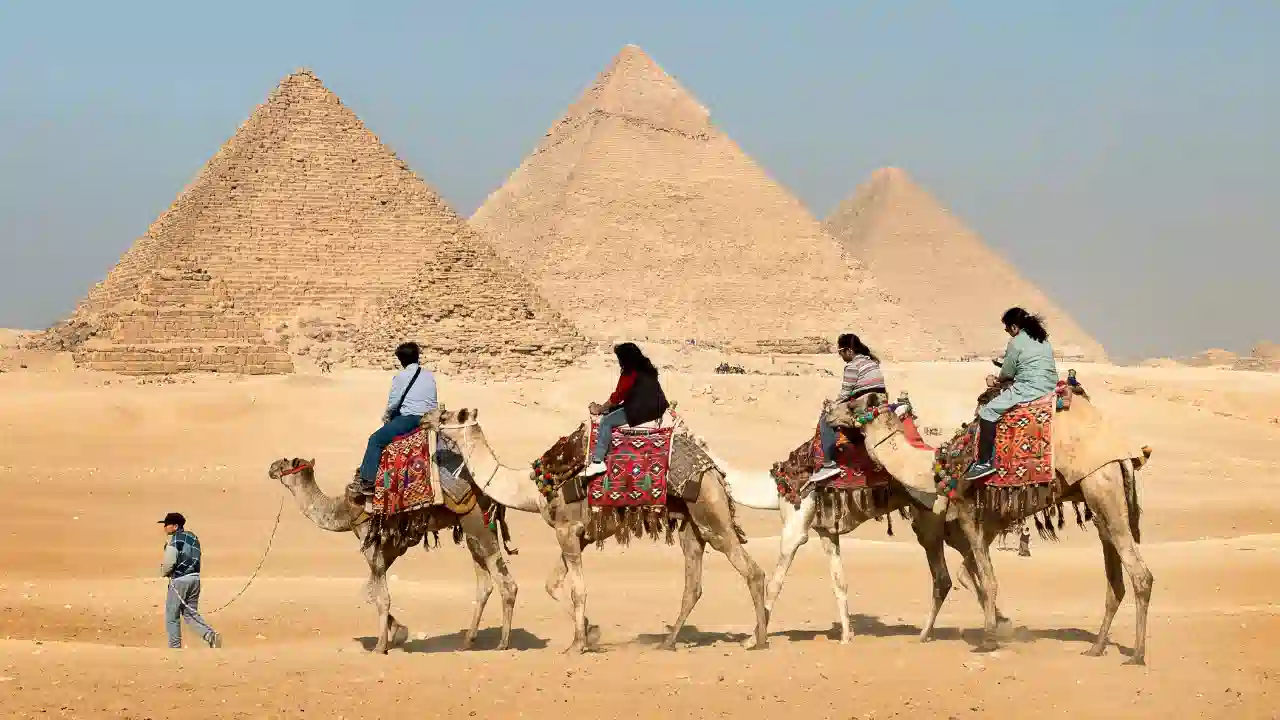
    Travellers visiting Egypt often sense this different relationship with time. Standing before the pyramids, sailing along the Nile, or exploring ancient temples creates an awareness of continuity across thousands of years.

    Egypt is not only a destination of monuments but also an encounter with endurance — a civilisation shaped by patience and vision.

    At Egypt Discovering, journeys along the Nile offer moments of quiet reflection where travellers can experience this timeless atmosphere directly.

    A Civilisation Built on Patience

    Ancient Egypt reminds us that the most enduring creations emerge from persistence rather than speed. The pyramids still stand because they were built with patience measured not in days or years, but in generations.

    Forbearance, once central to Egyptian life, remains a powerful skill today.

    Sometimes, the greatest progress happens slowly.
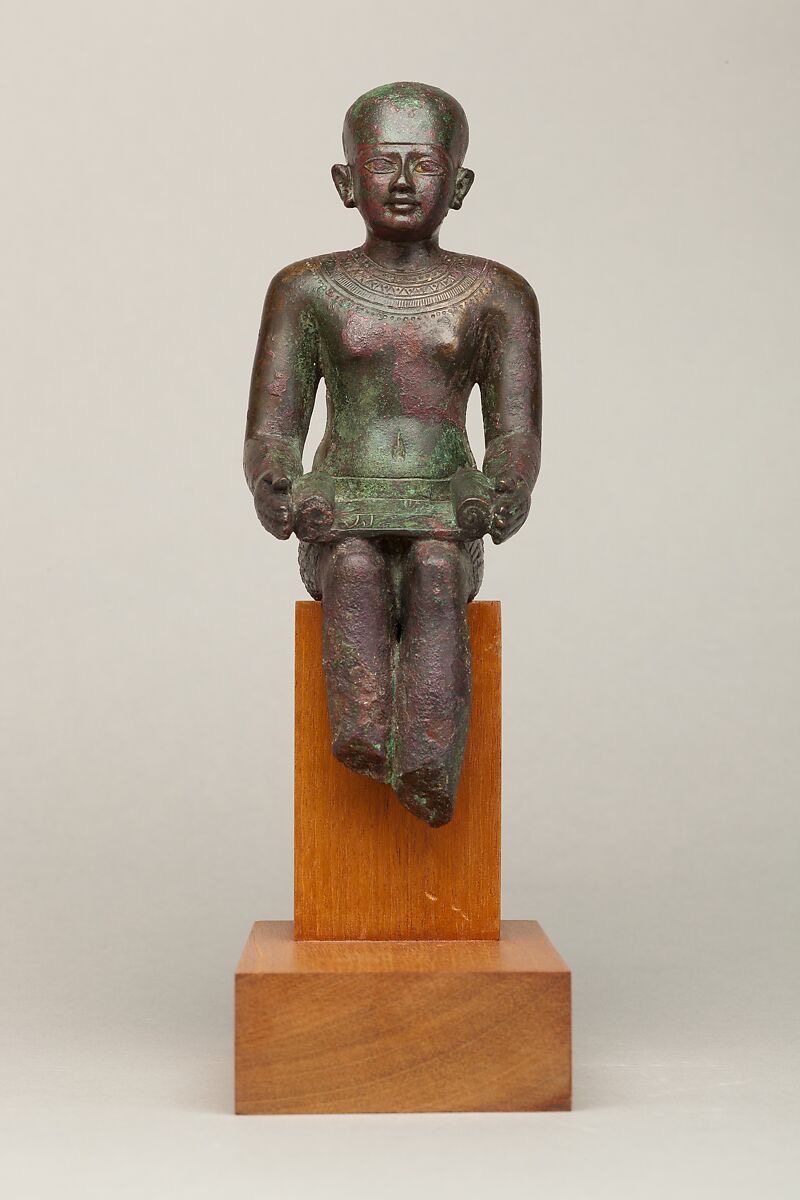
  • Imhotep: The Genius of Ancient Egypt Who Became a God

    Imhotep: The Genius of Ancient Egypt Who Became a God

    Architect, Physician, and Visionary of the Pyramid Age

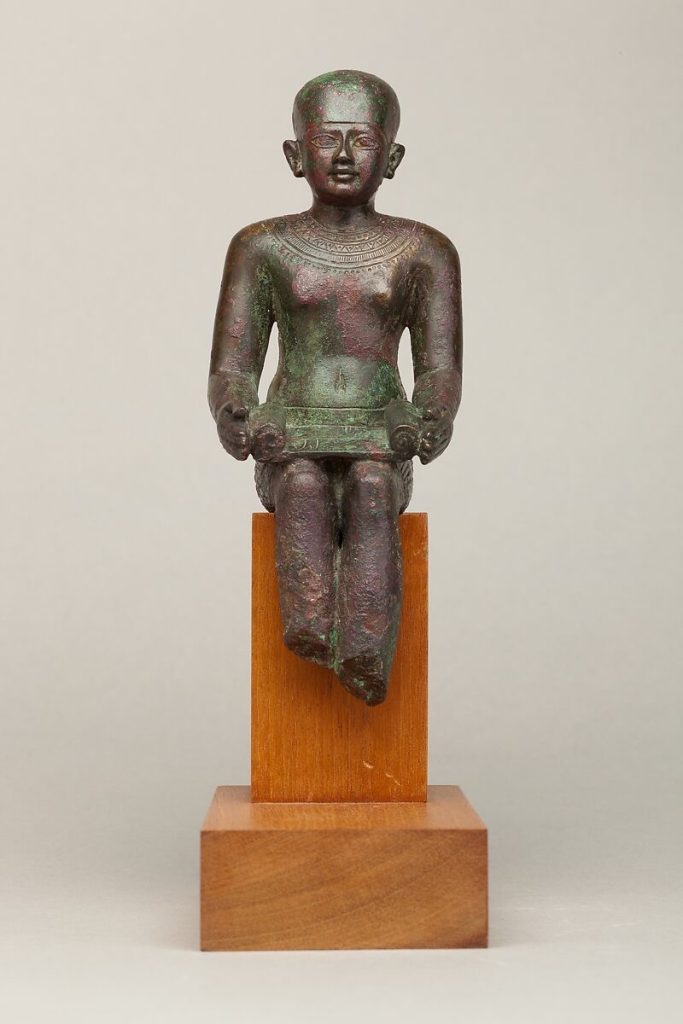
    Statue of Imhotep seated with papyrus scroll, ancient Egyptian architect and physician associated with the Step Pyramid at Saqqara.
    Statuette of Imhotep, Late Period–Ptolemaic Period (664–30 B.C.), from Memphis (Mit Rahina), Egypt. The seated figure represents Imhotep, architect of the Step Pyramid of Djoser and later revered as a god of wisdom and healing. Metropolitan Museum of Art, New York, Egyptian Art Collection.

    When people think of Ancient Egypt, they often imagine pyramids, pharaohs, and powerful gods. Yet one of the most extraordinary figures in Egyptian history began life not as a ruler or deity, but as a human whose brilliance transformed civilisation itself. His name was Imhotep — architect, physician, scholar, and eventually a god.

    Living during the Third Dynasty around 2650–2600 BCE, Imhotep served Pharaoh Djoser and rose to become one of the most influential individuals in early Egyptian history. His achievements were so remarkable that centuries later he was worshipped as a divine healer and patron of wisdom.

    Imhotep’s legacy bridges science, architecture, religion, and culture — making him one of the most fascinating personalities of the ancient world.

    Architect of the First Pyramid in History

    Imhotep is best known as the designer of the Step Pyramid of Djoser at Saqqara, widely recognised as the first monumental stone building ever constructed. Before this innovation, royal tombs were mastabas — flat, rectangular structures built from mudbrick.

    Imhotep introduced a revolutionary concept: stacking mastabas vertically to create a stepped structure rising toward the heavens. The result was the Step Pyramid complex, a vast architectural achievement that marked the beginning of the pyramid age.

    This innovation laid the foundations for the later pyramids of Giza, including the Great Pyramid of Khufu. In many ways, Imhotep changed the course of architectural history.

    Today, travellers visiting Saqqara encounter the origins of pyramid construction — a site that reflects the birth of monumental Egyptian architecture.

    Imhotep and the Origins of Medicine

    Beyond architecture, Imhotep gained legendary status as a physician. Although original medical texts attributed directly to him have not survived, ancient traditions consistently described him as a master healer with deep knowledge of anatomy, surgery, and herbal treatments.

    Centuries later, Egyptians honoured him as a god of medicine and healing. The Greeks identified him with their own healing deity, Asclepius, demonstrating how far his reputation spread beyond Egypt.

    Because of this association, Imhotep is often described as one of the earliest figures in the history of medical science.

    Political Power and Religious Influence

    Imhotep’s influence extended into government and religion. Serving as vizier under Pharaoh Djoser, he held one of the highest administrative positions in Egypt, effectively acting as chief advisor to the king.

    He also served as a high priest connected with the cult of Ra, the sun god, linking political authority with religious responsibility. This combination of intellectual, administrative, and spiritual roles elevated his status far beyond that of a typical official.

    Imhotep represented the ideal Egyptian scholar: knowledge combined with service to cosmic order, known as Ma’at.

    From Human to God: The Deification of Imhotep

    The transformation of Imhotep from historical figure to deity occurred gradually over centuries. By the New Kingdom period, around 1500 BCE, he was already revered as a semi-divine sage. During the Greco-Roman era, his worship expanded significantly, with temples dedicated to him across Egypt.

    Unlike most Egyptian gods, who were mythological from the beginning, Imhotep was a real person elevated to divine status — an exceptionally rare honour in Egyptian tradition.

    He was often depicted as a seated scholar holding a papyrus scroll, symbolising wisdom and learning.

    Imhotep’s Enduring Legacy

    Imhotep’s achievements shaped multiple fields:

    • Architecture — pioneering monumental stone construction
    • Medicine — early foundations of healing knowledge
    • Governance — administrative leadership under Pharaoh Djoser
    • Religion — later worship as a divine healer and sage

    Few individuals in human history have influenced so many domains simultaneously.

    For travellers exploring Egypt today, sites such as Saqqara provide direct connection to Imhotep’s world. Standing before the Step Pyramid allows visitors to witness the beginning of architectural innovation that would define Egyptian civilisation for millennia.

    A Legacy That Transcends Time

    Imhotep’s story demonstrates how knowledge, creativity, and vision can elevate a human life into legend. His transformation from scholar to god reflects the profound respect ancient Egyptians held for wisdom and achievement.

    More than 4,500 years later, his name remains synonymous with genius, innovation, and healing.

    Imhotep was not born a god.

    He became one.

  • Experience the Nile in Early Spring

    Experience the Nile in Early Spring

    The Perfect Escape Along Egypt’s Timeless River

    As winter fades and early spring arrives, the Nile enters one of its most beautiful travel seasons. Between March and April, temperatures are warm yet comfortable, days are filled with golden sunlight, and evenings remain pleasantly cool — ideal conditions for sailing, sightseeing, and relaxation along Egypt’s most legendary river.

    Travelling the Nile in early spring offers a perfect balance: excellent weather, vibrant landscapes, and an atmosphere that feels both lively and peaceful. Whether you seek adventure, authenticity, or refined comfort, this season is an exceptional time to explore Upper Egypt.

    A Felucca Journey: Authentic Adventure on the Nile

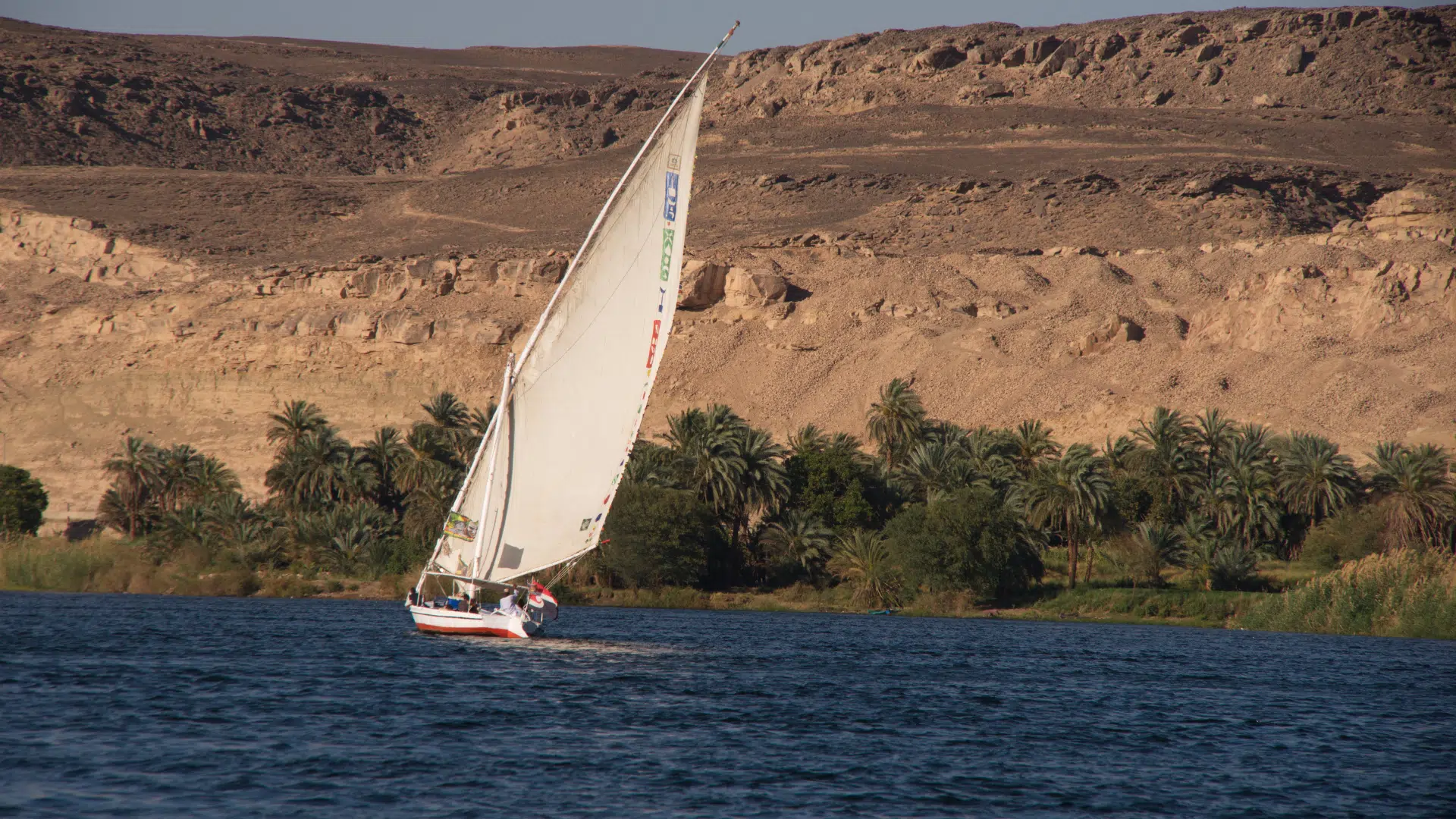
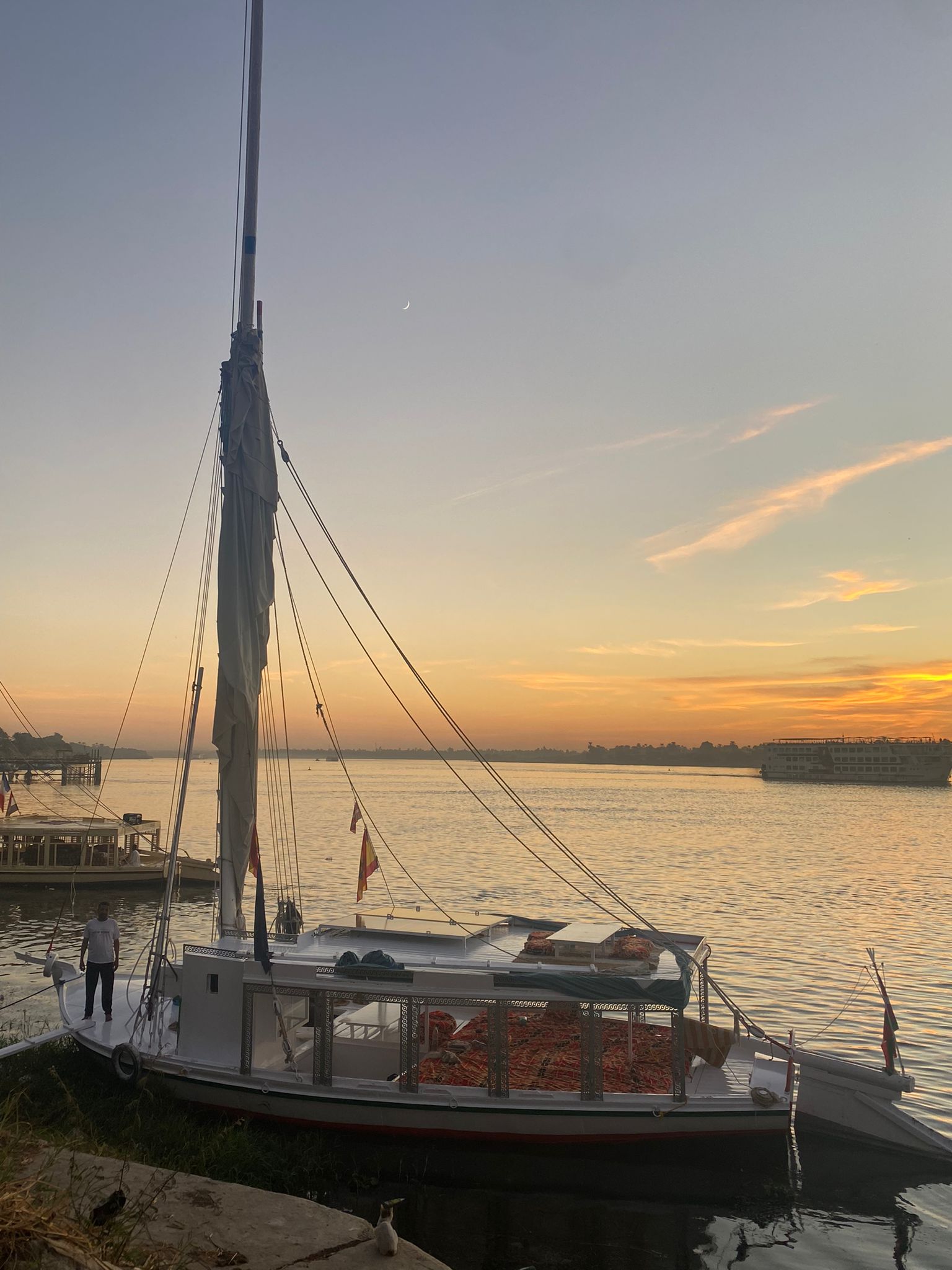
    For travellers drawn to simplicity, nature, and meaningful experiences, sailing on a traditional Egyptian felucca offers something truly unique. These elegant wooden sailing boats move with the wind, creating a calm rhythm far removed from modern noise and stress.

    Without engines or rigid schedules, felucca journeys allow guests to connect deeply with the Nile’s timeless atmosphere. Days unfold slowly as the boat glides past palm-lined shores, desert landscapes, ancient temples, and small riverside villages where life continues much as it has for generations.

    Sleeping beneath clear spring skies along quiet riverbanks often becomes one of the most memorable parts of the journey.

    A felucca voyage is not simply travel — it is immersion.

    Dahabiya Cruises: Luxury and Elegance on the River

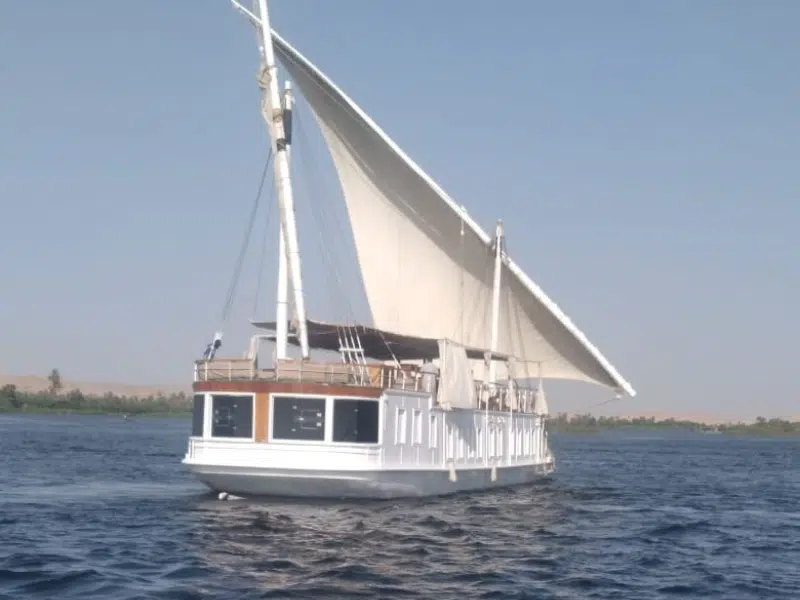
    For travellers seeking comfort and sophistication, a dahabiya cruise provides a refined way to experience the Nile. Historically favoured by Egyptian nobility and nineteenth-century explorers, modern dahabiyas combine traditional sailing charm with contemporary comfort.

    Spacious cabins, attentive service, and elegant decks create a relaxed atmosphere of luxury. Guests enjoy private temple visits, fine cuisine, and breathtaking sunsets over landscapes that have inspired travellers for centuries.

    A dahabiya journey offers both cultural depth and comfort — the hallmark of premium Nile travel.

    Why Early Spring Is an Ideal Time to Visit the Nile

    Travelling during early spring offers several advantages:

    • Comfortable temperatures for sightseeing and sailing
    • Pleasant evenings for outdoor dining and relaxation
    • Ideal light conditions for photography
    • Vibrant river landscapes and greenery
    • Excellent travel conditions before peak summer heat

    This season allows visitors to experience Egypt with comfort while still enjoying warm sunshine and clear skies.

    A Different Kind of Spring Escape

    While many European destinations are still emerging from winter, the Nile offers warmth, light, and history in abundance. Instead of crowded resorts, travellers encounter ancient temples, desert horizons, and peaceful riverbanks shaped by thousands of years of civilisation.

    The experience feels both restorative and inspiring.

    Discover the Nile with Egypt Discovering

    At Egypt Discovering, journeys along the Nile are designed to reveal the authentic spirit of Egypt — whether through adventurous felucca sailing or elegant dahabiya cruises. Each itinerary combines historical discovery, local encounters, and moments of quiet connection with nature.

    Early spring departures offer particularly rewarding conditions for exploring Upper Egypt in comfort.

    The Nile has carried travellers for millennia.

    Now it is your turn.

  • Staying Healthy While Travelling in Egypt

    Staying Healthy While Travelling in Egypt

    Practical Health Tips for European Travellers Exploring the Nile and Beyond

    Travelling to Egypt is an unforgettable experience — from the pyramids of Giza to the temples of Luxor and the peaceful landscapes of the Nile. Like any international journey, a little preparation helps ensure your trip remains comfortable, safe, and enjoyable.

    The good news is that Egypt is generally a safe destination for travellers, and with a few simple precautions, most visitors experience no health problems at all. Understanding local conditions, climate, and food practices allows you to focus on what truly matters: discovering one of the world’s most extraordinary civilisations.

    Drinking Water in Egypt: Smart Hydration Choices

    Hydration is essential, especially in Egypt’s warm climate. The safest recommendation for travellers is to drink bottled or filtered water throughout your trip.

    In many tourist areas such as Luxor and Aswan, tap water quality is often acceptable for washing and brushing teeth, but visitors with sensitive stomachs may still prefer bottled water for drinking. Bottled water is inexpensive and widely available everywhere in Egypt.

    Remember to stay hydrated throughout the day, particularly when visiting archaeological sites under direct sun.

    Enjoying Egyptian Food Safely

    Egyptian cuisine is rich, fresh, and full of flavour. Most travellers can enjoy local dishes without difficulty by following simple guidelines:

    • Choose freshly cooked meals served hot
    • Wash fruits and vegetables before eating them raw
    • Eat at reputable restaurants or places recommended by guides
    • Practise regular hand hygiene

    Traditional Egyptian meals prepared with local ingredients are often highlights of the journey, especially during Nile cruises and cultural experiences.

    Mosquitoes and Insect Protection

    Mosquitoes are present along the Nile, particularly near water and vegetation. However, Egypt is not considered a high-risk malaria destination for typical tourist routes.

    Using a standard insect repellent containing DEET or similar ingredients is usually sufficient protection. Wearing light clothing in the evenings can also help reduce bites.

    If irritation occurs, local pharmacies in Egypt are well stocked and easily accessible. Pharmacists often provide effective creams suited to regional conditions.

    Sun and Heat: Protecting Yourself in the Egyptian Climate

    The Egyptian sun can be intense, particularly during summer months. Preventing heat exhaustion is simple with basic precautions:

    • Drink water frequently
    • Wear sunscreen with high SPF
    • Use a hat and light, breathable clothing
    • Rest in shaded areas during peak afternoon heat

    Planning temple visits early in the morning or later in the afternoon can also improve comfort while sightseeing.

    Preventing Traveller’s Stomach Problems

    Digestive discomfort is one of the most common concerns among international travellers anywhere in the world. In Egypt, risk remains low when visitors follow sensible precautions:

    • Drink bottled or filtered water
    • Avoid undercooked foods
    • Wash hands regularly
    • Carry basic medication recommended by your doctor

    Most travellers complete their trip without any stomach issues, especially when staying on organised journeys with experienced guides.

    Medical Care and Travel Preparation

    Egypt has modern medical facilities in major cities and tourist areas. Pharmacies are widely available and often provide medications without complicated procedures.

    Before travelling, it is advisable to:

    • Arrange travel health insurance
    • Carry any personal medications
    • Note emergency contact numbers
    • Consult your doctor if you have specific medical conditions

    Preparation provides peace of mind and allows you to relax during your journey.

    Travel with Confidence in Egypt

    With reasonable precautions, travelling in Egypt is comfortable and safe for most visitors. Millions of travellers explore the country every year, enjoying its history, landscapes, and hospitality without health concerns.

    At Egypt Discovering, we prioritise guest wellbeing during all Nile journeys, ensuring clean food preparation, comfortable conditions, and attentive local support throughout the experience.

    Egypt offers adventure, culture, and beauty unlike anywhere else in the world. With a little preparation, you can focus entirely on enjoying the journey.

  • Sailing the Nile on a Traditional Felucca

    Sailing the Nile on a Traditional Felucca

    A 6-Day Adventure from Aswan to Esna

    Imagine travelling along the Nile not on a crowded cruise ship, but on a traditional Egyptian felucca — powered only by wind, guided by experienced local sailors, and surrounded by landscapes unchanged for thousands of years. A 6-day, 5-night journey from Aswan to Esna offers one of the most authentic travel experiences in Egypt, combining history, nature, culture, and simplicity.

    This is not luxury tourism. It is something far more meaningful: connection.

    Day 1: Discover Abu Simbel — Monumental Egypt

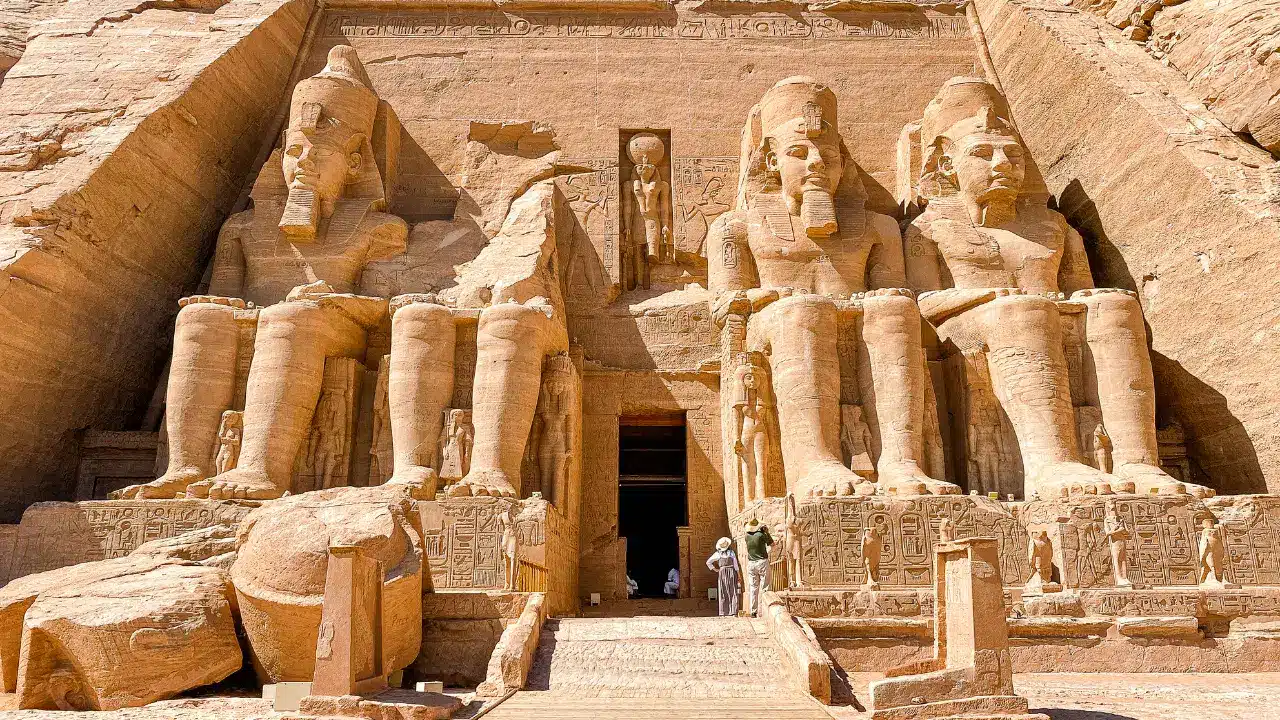
    Your journey begins with a visit to the extraordinary temples of Abu Simbel, one of Egypt’s most impressive archaeological sites and a UNESCO World Heritage location. Carved directly into the rock cliffs during the reign of Pharaoh Ramses II, the colossal statues create an unforgettable introduction to Ancient Egyptian civilisation.

    This powerful encounter with Egypt’s monumental past sets the tone for the days ahead.

    Day 2: Sailing from Aswan Towards Kom Ombo

    As your felucca departs from Aswan, the rhythm of the Nile immediately takes over. The landscape shifts between golden desert dunes and lush green riverbanks, offering peaceful scenery rarely experienced by conventional travellers.

    Stops along quiet river beaches allow time for swimming, relaxation, and immersion in nature. By evening, you reach Kom Ombo, home to the remarkable twin temple dedicated to Sobek, the crocodile god, and Horus, the falcon god. Visiting the temple at sunset creates a magical atmosphere.

    Days 3–4: Life Along the Nile and Village Encounters

    One of the highlights of felucca travel is the opportunity to connect with local communities along the Nile. Small villages, palm groves, and agricultural fields reveal daily life that has changed little over generations.

    Guests may step ashore, meet local families, and experience the warmth and hospitality that define Upper Egypt. Meals are freshly prepared on board using local ingredients, offering traditional Egyptian flavours in an authentic setting.

    This is cultural travel at its most genuine.

    Day 5: Sleeping Beneath the Stars

    Each night, the felucca anchors on peaceful riverbanks far from urban light pollution. Guests sleep under open skies filled with stars, accompanied by the gentle sounds of the Nile.

    This simple experience often becomes the most memorable part of the journey. Without distractions, travellers reconnect with nature, silence, and the rhythm of the river.

    It is Egypt at its most timeless.

    Day 6: Arrival in Esna and the Temple of Khnum

    The journey concludes in Esna, a historic town known for the Temple of Khnum, dedicated to the ram-headed creator god. The temple’s detailed carvings and unique architecture offer a final glimpse into Egypt’s layered history before departure.

    Leaving the felucca, travellers carry with them memories of landscapes, friendships, and moments that cannot be replicated elsewhere.

    An Authentic Nile Experience with Egypt Discovering

    At Egypt Discovering, felucca journeys are designed for travellers seeking authenticity rather than mass tourism. Sailing with experienced local crews allows guests to experience the Nile in its purest form — peaceful, cultural, and deeply human.

    This itinerary is flexible and may vary depending on weather conditions, wind, and guest preferences for visiting temples along the route. It is suitable for couples, families, and small groups looking for a meaningful adventure in Egypt.

  • Senet: The Ancient Egyptian Board Game of the Afterlife

    Senet: The Ancient Egyptian Board Game of the Afterlife

    How a Simple Game Became a Symbol of Spiritual Journey and Destiny

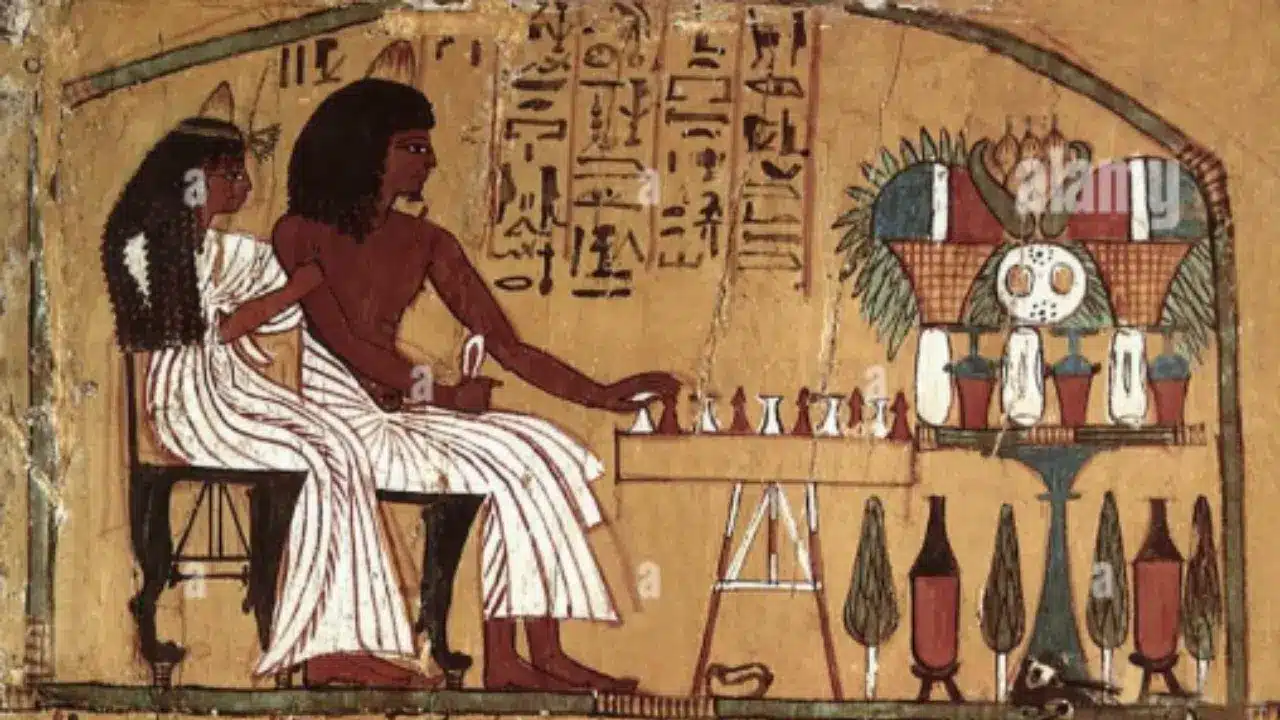
    Senet is one of the most fascinating windows into Ancient Egyptian daily life — and into Ancient Egyptian beliefs about death, rebirth, and the afterlife. Long before modern board games, Egyptians played Senet as entertainment, but also as something far more serious: a symbolic journey through the dangers and tests of the underworld.

    At EgyptDiscovering, we love the moments where history stops being “museum quiet” and becomes human again. Senet does exactly that. It shows Egyptians laughing, competing, thinking strategically — and at the same time preparing their souls for eternity.

    What Is Senet?

    Senet is widely considered the oldest known board game from Ancient Egypt. Its name is often translated as “passing”, a word that fits perfectly with the way Egyptians later understood the game: passing from one state to another, from life to death, and from death to the afterlife.

    Senet boards have been found in tombs and elite burials, indicating the game’s importance across centuries. It was not simply a pastime. It became part of the symbolic world that surrounded death and the hope of safe passage to the Field of Reeds — the ideal afterlife in Ancient Egyptian religion.

    Why Senet Was Placed in Tombs

    The presence of Senet in tombs was not accidental. Egyptians buried objects that could support the deceased in the next world: food, jewellery, amulets, texts, and sometimes games. Senet appears to have served as both comfort and protection — a familiar ritual object, and a spiritual metaphor for overcoming obstacles on the road to eternity.

    How Senet Was Played

    The Senet board is a grid of 30 squares, usually arranged in three rows of ten. Players moved their pieces according to the throw of casting sticks or knucklebones, functioning like an early form of dice.

    Even though not every rule has survived with certainty, the structure of the board and surviving depictions strongly suggest a mixture of strategy and chance. This balance mattered: in Ancient Egyptian thought, fate and divine order were always present, but human action still counted.

    The Board as a Map of the Afterlife

    Over time, Senet became increasingly symbolic. Certain squares appear to have represented key dangers and turning points in the soul’s journey. Many modern reconstructions refer to the “House of Water” as a perilous square and the final squares as zones of safety and fulfilment, sometimes described as a “House of Happiness”.

    Whether played in life or placed in a tomb for the dead, Senet became a miniature drama of passage: risk, judgement, protection, and arrival.

    Senet and Ancient Egyptian Religion

    Senet’s deeper power lies in how it blends play with belief. Egyptians did not sharply separate the everyday world from the sacred world. Ritual and daily life overlapped. A game could be entertainment and spiritual practice at the same time.

    Winning in Senet was more than a social victory. In later periods, it could be read as a sign of divine favour — an omen that the gods supported one’s passage, one’s balance with Ma’at, and one’s readiness for what came after death.

    Senet and Tutankhamun

    Senet boards were discovered among the treasures of Tutankhamun, reinforcing the idea that the game was not only popular but meaningful. For a pharaoh — a divine ruler expected to unite earthly and cosmic order — a game representing spiritual passage was an ideal companion for eternity.

    Why Senet Still Captivates Travellers Today

    Senet remains compelling because it makes Ancient Egypt feel close. It reveals a civilisation that was monumental, yes — but also intimate. People played games, argued over rules, celebrated luck, feared loss, and looked for meaning in patterns.

    For travellers exploring Egypt, these details matter. Temples and tombs show the grandeur of the civilisation. But objects like Senet show the human mind behind it: curiosity, strategy, humour, and the timeless desire to win against fate.

    At EgyptDiscovering, we share stories like Senet because they help visitors experience Egypt as a living culture, not just as a list of monuments. The past becomes real when it feels personal.

    A Board Game That Became a Journey

    Senet began as a game. It became a spiritual metaphor. And today, it remains one of the clearest reminders that Ancient Egypt was not only built in stone — it was lived in moments.

    One move at a time, Senet carried Egyptians through their greatest question of all: what happens after life ends?

  • Tutankhamun’s Mask Beard Incident: The Restoration Mistake That Shocked the World

    Tutankhamun’s Mask Beard Incident: The Restoration Mistake That Shocked the World

    A Modern Conservation Lesson from Ancient Egypt

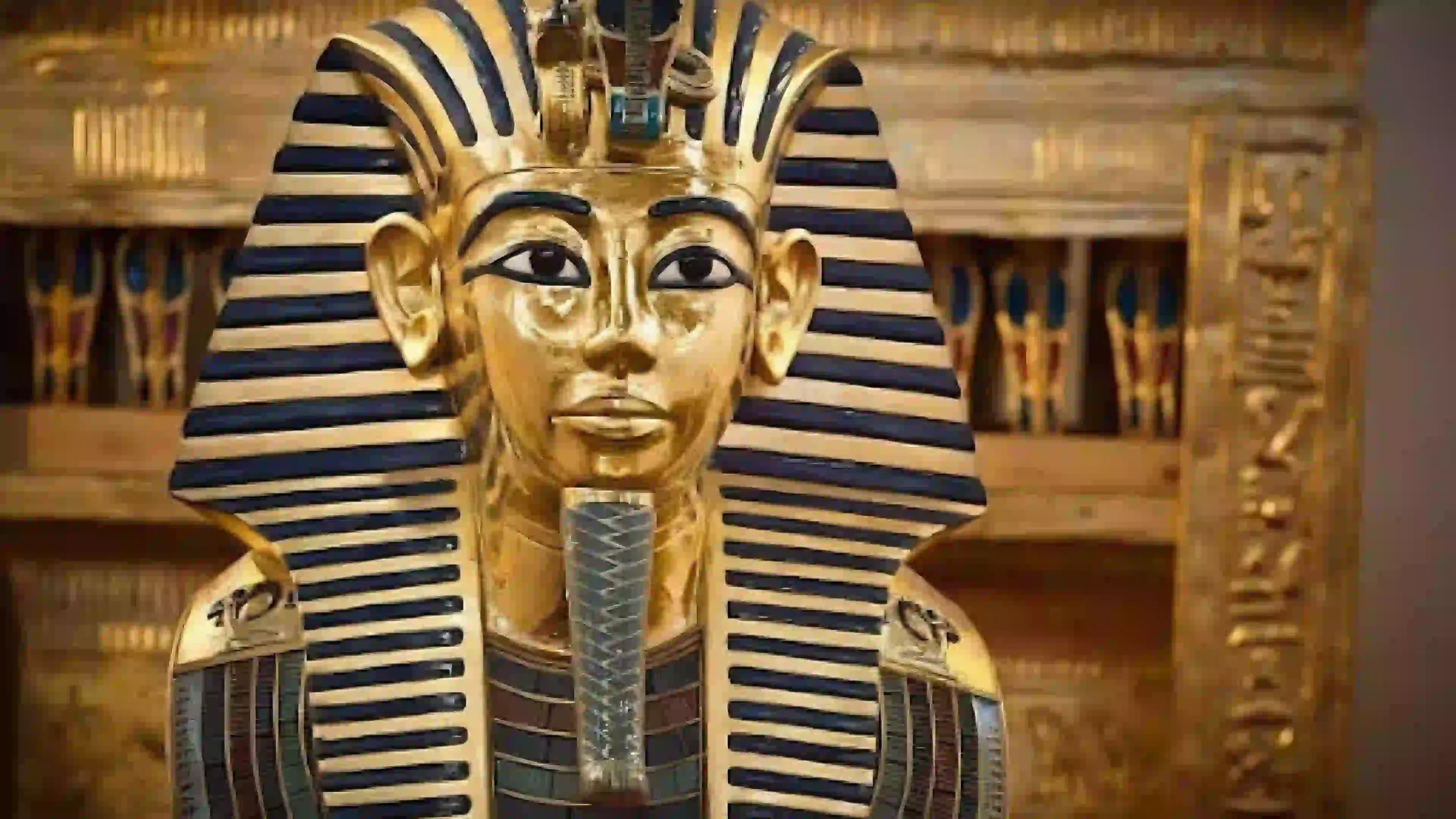
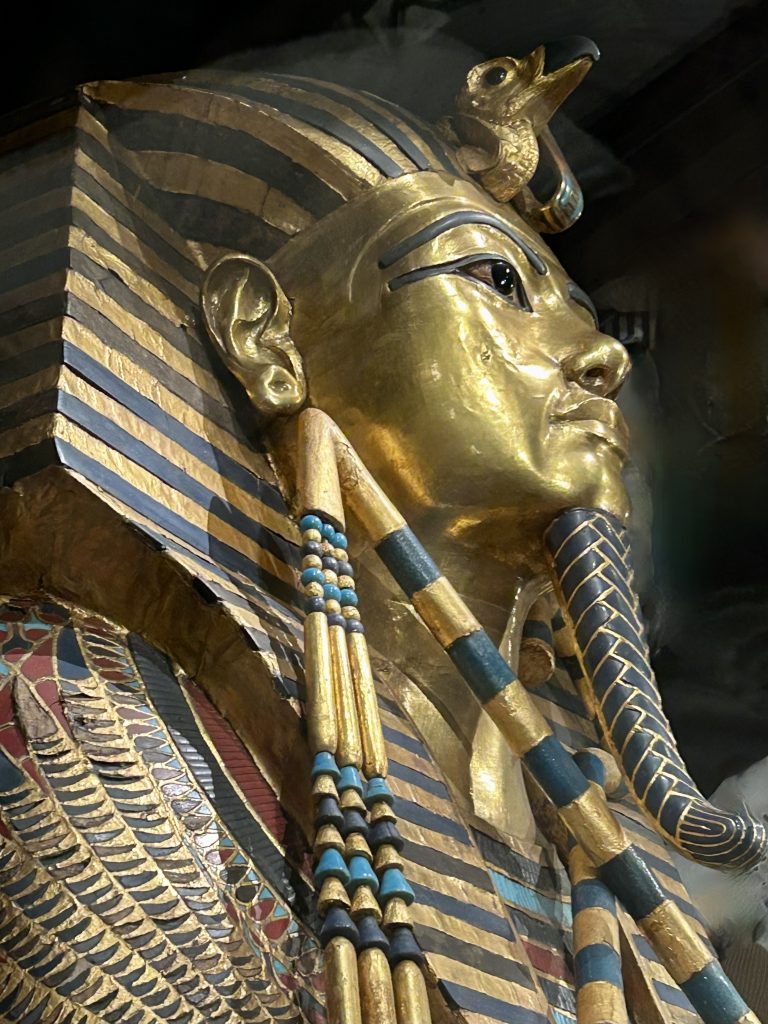
    Close view of Tutankhamun’s golden funerary mask showing the ceremonial beard and headdress
    Detail of the golden funerary mask of Tutankhamun, highlighting the ceremonial beard that became the focus of a restoration controversy

    When people think of Ancient Egypt, one of the most recognisable images in the world is the golden funerary mask of Pharaoh Tutankhamun. Discovered in 1922 in the Valley of the Kings, the mask has become a global symbol of Egyptian civilisation, royal power, and artistic mastery.

    Yet in 2014, this priceless artefact became the centre of an unexpected controversy — when the famous ceremonial beard attached to the mask broke off during handling at the Egyptian Museum in Cairo. What followed was a restoration mistake that attracted international attention and highlighted the importance of professional conservation methods in preserving world heritage.

    The Divine Beard of the Pharaoh

    Tutankhamun’s funerary mask, created more than 3,300 years ago, is crafted from gold, semi-precious stones, and coloured glass. Among its most significant features is the long, braided false beard attached to the chin.

    In Ancient Egyptian symbolism, the beard represented divine authority. Pharaohs were considered earthly manifestations of the gods, and the ceremonial beard visually reinforced this sacred status. It was not merely decorative — it was a statement of cosmic legitimacy and royal identity.

    Understanding this symbolism helps explain why damage to the beard caused such concern among historians, conservators, and the public alike.

    The 2014 Accident at the Egyptian Museum

    During routine maintenance and cleaning procedures in 2014, the beard accidentally detached from the mask. For museum staff, the situation was extremely stressful: one of the world’s most famous artefacts had been damaged unexpectedly.

    In an attempt to resolve the issue quickly, the beard was reattached using epoxy resin — a strong industrial adhesive unsuitable for delicate archaeological objects. The repair created visible residue and misalignment, and later cleaning attempts caused minor scratches to the gold surface.

    When images of the repair circulated publicly, criticism followed rapidly from the international conservation community.

    Professional Restoration and Scientific Conservation

    Following the controversy, a team of Egyptian and German conservators carried out a careful scientific restoration. The incorrect adhesive was removed, and the beard was reattached using reversible conservation materials specifically designed for historic artefacts.

    Reversible adhesives are essential in museum conservation because they allow future experts to make corrections without damaging the original object. The restoration successfully returned the mask to its proper condition while preserving its structural integrity.

    This episode ultimately became a valuable case study in modern conservation ethics and museum practice.

    Tutankhamun’s Legacy: Why Preservation Matters

    Tutankhamun remains one of the most important figures in Egyptian history, not because of political achievements, but because the discovery of his nearly intact tomb transformed our understanding of Ancient Egypt.

    Today, his treasures — including the famous mask — continue to attract millions of visitors to Egypt, particularly to Cairo’s museums and the archaeological sites of Luxor and the Valley of the Kings.

    For travellers exploring Egypt, encountering the legacy of Tutankhamun provides a direct connection to a civilisation that flourished over three millennia ago.

    Experiencing Ancient Egypt Today

    Visitors travelling along the Nile from Luxor to Aswan can explore the temples, tombs, and landscapes connected to the world of Tutankhamun. Sites such as the Valley of the Kings, Karnak Temple, and Luxor Temple reveal the cultural and spiritual environment in which the young pharaoh lived.

    At Egypt Discovering, journeys through Upper Egypt aim to connect travellers not only with monuments but with the deeper history and living heritage that define the country today.

    A Story of Human Error and Human Care

    The beard incident serves as a reminder that even the most precious cultural treasures depend on human responsibility for their preservation. While the mistake drew global attention, the successful restoration demonstrated the importance of expertise, patience, and scientific methods in protecting heritage.

    Tutankhamun’s mask endures as one of humanity’s greatest artistic achievements — a bridge between ancient craftsmanship and modern admiration.

  • Karnak Temple in Luxor: A Majestic Journey Through Ancient Egyptian Civilisation

    Karnak Temple in Luxor: A Majestic Journey Through Ancient Egyptian Civilisation

    Discover the Largest Temple Complex in Egypt

    In the heart of Luxor, on the eastern bank of the Nile, stands one of the most extraordinary monuments ever created by humanity — Karnak Temple. More than a historical site, Karnak is a vast sacred city built over nearly two thousand years, dedicated primarily to the god Amun-Ra, the supreme deity of ancient Thebes.

    For travellers exploring Egypt, visiting Karnak is not simply sightseeing. It is an immersion into the spiritual, architectural, and political power of Ancient Egyptian civilisation. Every column, statue, and carved wall reflects a culture that sought permanence, cosmic harmony, and connection with the divine.

    Karnak is not just a monument of the past. It is an experience that transforms the way visitors understand Egypt.

    Entering Karnak: Walking Through the Gateway of the Gods

    Approaching Karnak Temple is unforgettable. The grand avenue of ram-headed sphinxes leads visitors towards monumental pylons that once marked the entrance to sacred space. Crossing this threshold feels like stepping into another world — one where gods and pharaohs shaped reality together.

    The scale of Karnak is astonishing. Covering more than 100 hectares, it remains the largest religious complex ever built in the ancient world. Generations of pharaohs expanded the temple, each leaving architectural signatures that still stand today.

    This continuity makes Karnak unique: it is not the creation of one ruler but the achievement of an entire civilisation across centuries.

    The Hypostyle Hall: Architecture Beyond Imagination

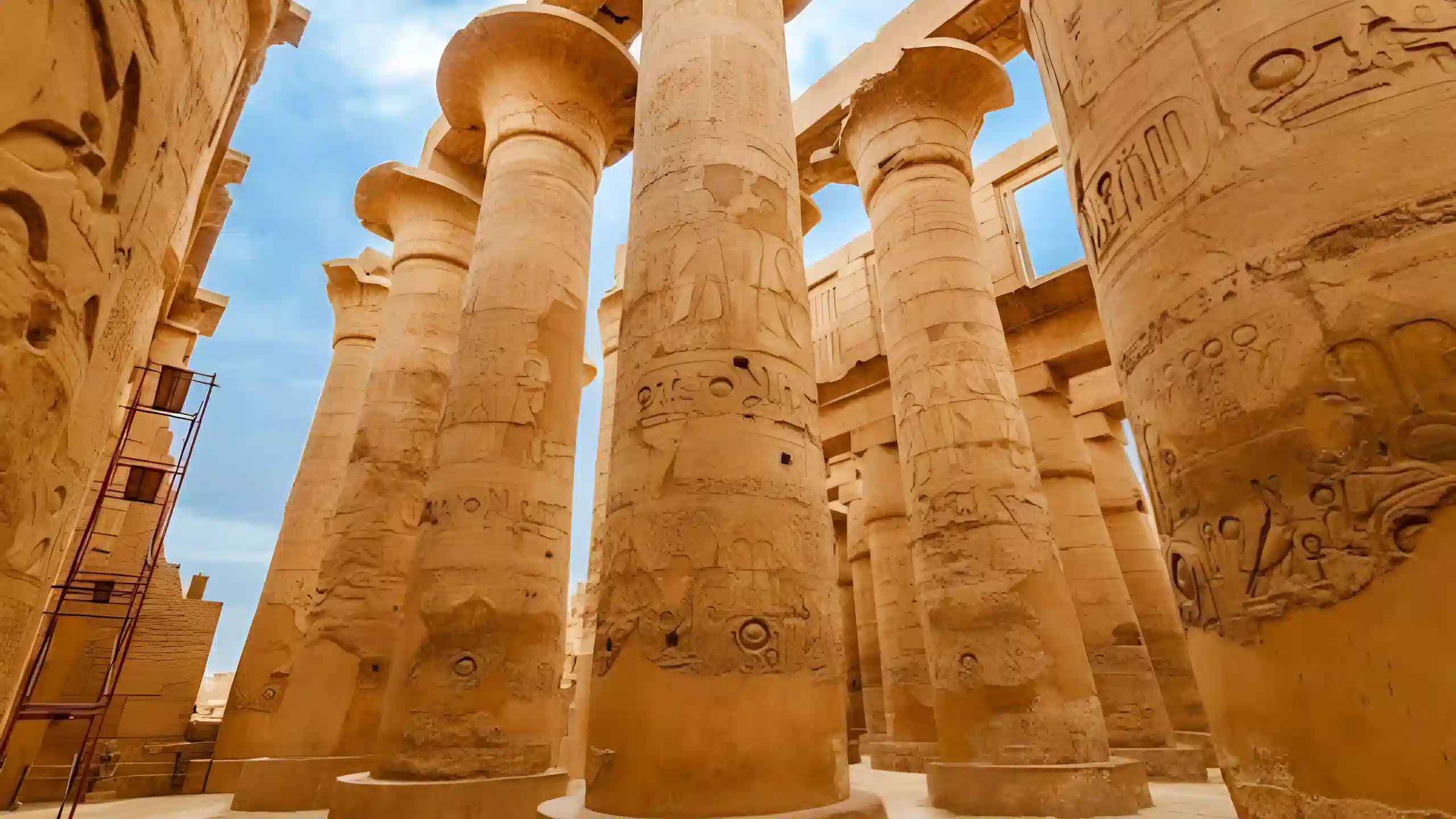
    The most famous section of Karnak is the Great Hypostyle Hall, a breathtaking forest of 134 colossal stone columns, some reaching over 20 metres high. Walking between them creates a powerful sense of human scale against monumental ambition.

    Hieroglyphic inscriptions cover the columns, recording religious rituals, royal victories, and offerings to the gods. Sunlight filtering through the stone structures creates shifting shadows that change throughout the day, enhancing the sense of timelessness.

    For many visitors, this is one of the most awe-inspiring spaces in all of Egypt.

    Sacred Spaces and Spiritual Meaning

    Karnak was not only an architectural masterpiece; it was a living religious centre. Priests performed daily rituals, festivals honoured the gods, and ceremonies connected the divine world with human society.

    One of the most peaceful areas within the complex is the Sacred Lake, used for ritual purification. Its still waters reflect surrounding monuments, creating a moment of calm within the vast temple environment.

    Ancient Egyptians believed temples were places where cosmic order — Ma’at — was maintained. Standing inside Karnak today, travellers often sense this profound spiritual dimension that transcends time.

    Karnak and the Nile: The Heart of Egyptian Power

    The temple’s location near the Nile was not accidental. The river served as the main transport route, allowing statues, obelisks, and building materials to reach the site. Religious processions also travelled between Karnak and Luxor Temple along ceremonial avenues.

    This connection between temple and river reveals how geography shaped Egyptian civilisation. The Nile was not only a source of life but also a pathway of belief, politics, and cultural unity.

    Travellers exploring Luxor as part of a Nile journey experience this same historical landscape that once connected temples, cities, and kingdoms.

    Visiting Karnak Today: A Highlight of Any Egypt Journey

    Today, Karnak remains one of the most important destinations for anyone travelling to Egypt. Whether visiting Luxor independently or as part of a Nile cruise from Aswan to Luxor, the temple offers a direct encounter with one of the world’s greatest civilisations.

    Exploring Karnak with knowledgeable local guides deepens the experience, revealing stories hidden within hieroglyphs, symbolism, and architecture.

    At Egypt Discovering, journeys through Upper Egypt are designed to connect travellers not only with monuments but with the living culture surrounding them — from the Nile landscapes to local communities and traditions.

    A Timeless Monument of Human Ambition

    Karnak stands as a reminder that human creativity can reach beyond centuries. Built stone by stone across generations, it embodies the ancient Egyptian pursuit of eternity — the desire to create something lasting, meaningful, and aligned with the cosmos.

    For modern visitors, Karnak is more than a historical site. It is a place where past and present meet, where imagination expands, and where the scale of human achievement becomes tangible.

    Standing among its towering columns, one understands why Egypt continues to inspire travellers from around the world.

    Karnak is not simply a destination.

    It is a journey through time itself.

  • The Nile’s Role in Ancient Egyptian Civilisation

    The Nile’s Role in Ancient Egyptian Civilisation

    The River That Created Egypt

    The history of Ancient Egypt cannot be understood without the Nile River. More than a geographical feature, the Nile was the foundation of Egyptian civilization — economically, culturally, spiritually, and politically. It transformed desert landscapes into fertile land, connected cities and temples, and shaped one of the most influential cultures in human history.

    For thousands of years, life in Egypt followed the rhythm of the river. Agriculture, trade, religion, and daily life all depended on the Nile’s predictable cycles. Without the Nile, there would have been no pyramids, no temples, and no pharaonic civilization as we know it today.

    Even now, travelers sailing along the Nile between Aswan and Luxor experience landscapes and traditions that remain deeply connected to this ancient relationship between people and river.

    The Nile as a Source of Life and Prosperity

    Ancient Egypt flourished because of the Nile’s annual flooding. Each year, the river overflowed its banks, depositing nutrient-rich black silt across the valley. This fertile soil allowed Egyptians to cultivate wheat, barley, vegetables, and flax, creating agricultural abundance in the middle of the desert.

    This natural cycle supported population growth, economic stability, and political power. Surplus crops could be stored, traded, and taxed, enabling the rise of centralized government and monumental architecture.

    The Nile was also Egypt’s main transportation route. Boats carried goods, people, and ideas between Upper and Lower Egypt, linking major cities such as Thebes (Luxor), Memphis, and Aswan. In many ways, the Nile functioned as the ancient world’s most efficient highway, making long-distance communication and trade possible.

    Today, a Nile cruise still follows these historic routes, allowing visitors to travel through the same landscapes that sustained Egyptian civilization for millennia.

    The Spiritual Meaning of the Nile in Ancient Egypt

    The Nile was not only a physical lifeline but also a sacred presence. Egyptians believed the river was a divine gift, personified by the god Hapi, associated with fertility, abundance, and nourishment. The annual flood was seen as a blessing from the gods — a sign that cosmic order, known as Ma’at, remained in balance.

    The river was also deeply connected to ideas of death and rebirth. The god Osiris, ruler of the afterlife, was linked symbolically to the Nile’s cycles. Just as the river flooded, receded, and renewed the land, human life was understood as part of a continuous cycle of transformation.

    This spiritual symbolism influenced Egyptian architecture and geography. Temples were often built along the Nile’s banks, and burial sites were typically located on the western side of the river, where the sun set — representing the transition to the afterlife.

    Travelers visiting temples in Luxor, Kom Ombo, Edfu, and Aswan can still sense how closely religion, landscape, and daily life were intertwined.

    The Nile as Egypt’s Cultural and Political Backbone

    Control of the Nile meant control of Egypt. Pharaohs managed irrigation systems, agricultural production, and transportation networks, reinforcing their authority as both political rulers and divine intermediaries.

    The river unified Upper and Lower Egypt, making centralized governance possible and helping sustain one of the longest-lasting civilizations in human history.

    Beyond politics, the Nile shaped Egyptian identity. Festivals, myths, calendars, and artistic representations all reflected the river’s importance. The Nile was not separate from Egyptian culture — it was its foundation.

    Experiencing the Nile Today: A Journey Through Living History

    Modern travelers can still experience the profound connection between Egypt and the Nile. Sailing on a traditional felucca or exploring ancient temples along the river offers insight into how geography shaped civilization.

    From the peaceful landscapes of Aswan to the monumental temples of Luxor, the Nile remains the thread connecting Egypt’s past and present.

    At Egypt Discovering, journeys along the Nile are designed to go beyond sightseeing. They allow travelers to experience authentic Egyptian culture, local communities, and timeless landscapes that reflect thousands of years of history.

    The River That Made a Civilisation Possible

    Ancient Egypt was not built despite the desert — it was built because of the Nile. The river created fertile land, enabled trade, inspired religion, and unified a nation.

    Understanding Egypt means understanding the Nile.

    And traveling along the Nile is not simply a trip through geography. It is a journey through the origins of civilization itself.

  • Egypt Is Not to Be Defined –   It Is to Be Experienced

    Egypt Is Not to Be Defined – It Is to Be Experienced

    Simply, Proudly, Eternally Egyptian

    When people think about Egypt, the first images that often appear are the pyramids of Giza, the Nile River, and the golden desert landscapes. Yet Egypt is far more than monuments or geography. Egypt is a living civilization — continuous, evolving, and deeply human — shaped over thousands of years by culture, trade, spirituality, and resilience.

    Egypt has never belonged to a single category, race, or region. Its identity cannot be reduced to modern labels.

    Ancient Egypt was not purely Mediterranean, even though it traded across the sea.

    It was not solely African, though the pulse of Africa flows through the Nile Valley.

    It was not limited to Semitic or Hamitic classifications, nor to modern ideas of black or white.

    Egypt was — and remains — something greater: uniquely, irreducibly Egyptian.

    Egypt: A Bridge Between Worlds

    The strength of Egyptian civilization has always been its ability to connect worlds. For millennia, Egypt welcomed merchants, travelers, scholars, and explorers from across Africa, the Middle East, Europe, and Asia. Along the Nile, cultures met, ideas merged, and knowledge flourished.

    Rather than losing its identity, Egypt absorbed influences while maintaining its own cultural core. This balance between openness and continuity is one of the reasons Egypt became one of the most influential civilizations in human history.

    Today, that same spirit continues.

    Modern Egypt stands at the crossroads of continents — geographically, culturally, and spiritually — offering travelers an experience that is both ancient and alive.

    Travel to Egypt: Beyond Monuments and History

    For modern travelers, Egypt is not only about visiting archaeological sites. It is about immersion.

    From Cairo’s vibrant streets to the peaceful landscapes of Aswan, from the temples of Luxor to the timeless rhythm of life along the Nile, Egypt offers experiences that go beyond tourism.

    A Nile cruise is not simply a journey between destinations. It is a passage through history, culture, and daily life. Watching the riverbanks pass slowly by reveals villages, palm groves, farmers, fishermen, and traditions that have existed for centuries.

    This is where Egypt becomes real.

    The Spiritual Dimension of Egypt

    Egypt has always carried a profound spiritual presence. The ancient temples dedicated to deities such as Sekhmet, Maat, Nut, and Serket were not only religious spaces but centers of knowledge, philosophy, and cosmic understanding.

    Travelers today often feel something difficult to explain — a sense of connection, stillness, or recognition — when standing inside a temple or sailing at sunset on the Nile.

    Egypt offers more than history. It offers perspective.

    Authentic Egypt Experiences with Egypt Discovering

    At Egypt Discovering, our journeys are designed to go beyond traditional tours. We focus on authentic experiences along the Nile, connecting travelers with local communities, landscapes, and stories that reveal the true spirit of Egypt.

    Whether sailing on a traditional felucca, exploring ancient temples, or sharing moments with local families, our goal is simple: to help travelers experience Egypt as a living culture, not just a historical destination.

    Our routes from Aswan to Luxor, and beyond, allow visitors to discover the diversity, beauty, and humanity that define this country.

    Egypt Is a Living Journey

    Egypt cannot be placed inside categories such as East or West, Africa or Middle East. It is all of these, and more. Egypt is a meeting point of civilizations, a cradle of human creativity, and a bridge across time.

    For travelers seeking authenticity, depth, and meaning, Egypt offers something rare — an experience that continues to evolve long after the journey ends.

    Come and feel the warmth of a land shaped by millennia of sunlight.

    Let the Nile carry you through landscapes unchanged by time.

    Discover a civilization that is not frozen in the past but alive in the present.

    Egypt is not a destination to define.

    Egypt is a journey to experience — simply, proudly, eternally Egyptian.